
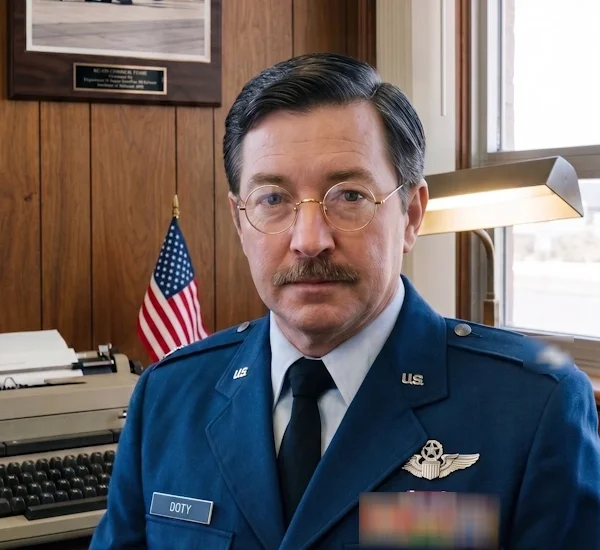
Is Richard Doty a brave whistleblower or a master of disinformation? For decades, seekers in UFOlogy have struggled to separate fact from complex fiction. You deserve to know if the stories from this former Air Force agent are real or a haunting web of lies. Today, we check the proof to reveal the chilling truth behind his claims. Let’s explore the facts that define his strange legacy.
The Case for the Core Truth (Pros)
Verified AFOSI background and institutional access
Doty was an Air Force Office of Special Investigations (AFOSI) agent—he is an acknowledged former AFOSI operative—which gives him bona fide ties to military investigative channels. That background matters: AFOSI agents routinely had access to classified information, interagency contacts, and investigative tools unavailable to civilian researchers. For UFO researchers, institutional bona fides are not trivial. Possessing an AFOSI identity and a history of working within military counterintelligence grants a baseline credibility that simple second‑hand rumor or fringe testimony lacks.
Insider access to people and programs
Over multiple decades Doty cultivated relationships with active and retired military officers, intelligence community personnel, and civilian contractors. Those networks meant he could plausibly have direct or indirect knowledge of events, recoveries, or programs that never reached public channels. Even if some of his claims are disputed, the fact that a proportion of his contacts and claimed access can be independently traced (people who worked in intelligence, bases, or logistics) makes it reasonable to treat at least some of his testimony as informed by insider exposure rather than pure speculation.
Pattern similarities to later whistleblowers
Doty’s profile—former intelligence/AFOSI official, willingness to speak publicly about sensitive UFO-related matters, and claims suggesting government secrecy—prefigures a later generation of insider witnesses, including figures like David Grusch. Those similarities matter because they establish a recurrent pattern: individuals who have held clearances or worked in intelligence roles sometimes surface with allegations or insider claims that force mainstream attention on otherwise fringe topics. That pattern increases the plausibility that at least some insider disclosures reflect genuine, unresolved programs or withheld information rather than pure invention.
Partial corroborations and ambiguous threads
Some elements associated with Doty’s narrative (references to clandestine programs, nonstandard recoveries, or the existence of classified projects) sit within a larger, messy mosaic of later reports, FOIA records, and testimonies that hint the official public story is incomplete. In other words, Doty’s accounts are not entirely isolated—they intersect with other anomalous threads that warrant further inquiry.
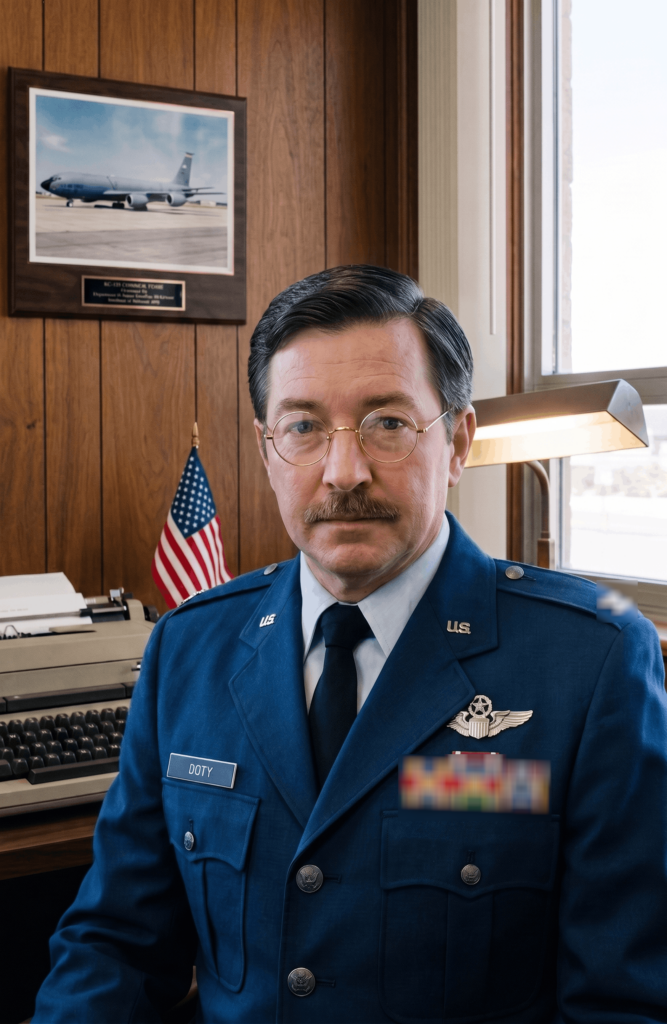
The Case for Ongoing Disinformation (Cons)
Documented involvement in deception and hoaxes
Doty has been widely reported—and in some interviews has admitted—to participating in disinformation activities. This includes orchestrating false leads and staging hoaxes targeted at UFO researchers and others considered gullible or problematic for operational security. That admission is crucial because it converts Doty from merely “an insider” into “a trained operator who used deception as a tool.” For a researcher, the possibility that an informant also has a playbook for misinformation substantially erodes the evidentiary value of uncorroborated claims.
Feeding false documents and misleading researchers
Multiple researchers and investigative accounts assert that Doty supplied forged or misleading documents to civilian UFO investigators. Whether the items were deliberate forgeries, planted misdirections, or classified-but-contextually-misrepresented papers, the effect is the same: artifacts attributed to authoritative sources that cannot be relied on without independent verification. In the UFO research ecosystem—where documentary evidence is already rare—intentionally tainted documents multiply doubt and make it harder to distinguish legitimate leaks from engineered noise.
The Paul Bennewitz affair and its human cost
Doty’s actions are widely implicated in the Paul Bennewitz case, one of the most consequential episodes in modern UFO history. Bennewitz, a New Mexico electronics businessman, became convinced he had uncovered alien installations; investigators and reporting indicate that officials—through agents believed to include Doty—fed or allowed misleading information that bolstered Bennewitz’s delusions. The psychological fallout for Bennewitz was severe: his life unraveled amid intense paranoia, he was hospitalized, and his experience became a cautionary case about the ethics and consequences of using disinformation against civilians. For many researchers, the Bennewitz story is not an abstract caution—it is tangible evidence that official disinformation operations actively corrupted the UFO information space and damaged people.
Tactical motive: counterintelligence, not truth-telling
AFOSI and related agencies have legitimate counterintelligence mandates—during the Cold War and after, deception and denial were standard tactics to protect classified programs. From an institutional perspective, creating noise around UFO reports can be an effective defensive posture. This motive explains why an AFOSI operative might intentionally obscure the truth rather than reveal it. Consequently, insider status can cut both ways: the same access that makes a source potentially informative also makes them a plausible vector for deliberate obfuscation.
The problem of source credibility and possible double-bluff
A trained disinformation operator can manufacture credibility by leaking partial truths mixed with lies. That makes it exceptionally difficult to adjudicate claims: corroborating detail might be the very mechanism through which trust is manufactured. Doty’s known aptitude for deception therefore complicates any attempt to treat his statements as reliable without independent, high-quality corroboration.
The Modern Incentive: Spinning Tales for Cash?
Richard Doty is now an older, retired figure who has, in recent years, become a recognizable personality within the commercial UFO and paranormal media world. The former Air Force counterintelligence officer who figures in many Cold War-era UFO narratives has made frequent paid appearances on platforms such as Gaia, in streaming documentaries, and on YouTube interview shows. Those appearances bring visibility-and often direct or indirect compensation-into a media ecosystem that rewards attention-grabbing stories.
One plausible reading of this shift is that Doty’s incentives have evolved. Once embedded in military and intelligence structures, a retired public figure can find relatively few ways to earn income and remain relevant. Paid interviews, documentary fees, and platform monetization offer financial support, and producers typically favor sensational or novel claims because they draw viewers and subscribers. From this viewpoint, offering increasingly colorful or dramatic accounts can be understood as a pragmatic response to market forces: more sensational stories generate more bookings and revenue, so there is a clear economic incentive to keep the narratives lively.
That argument should be weighed against other possibilities. It’s also possible that Doty genuinely believes what he says, that he enjoys storytelling itself, or that he continues patterns established during his career that were not driven purely by money. Some interviewers and audiences prize theatricality and performance; some guests play to that expectation without necessarily intending deception. Moreover, commercial platforms and producers share responsibility: they select and amplify material that sells, shaping what types of accounts become profitable.
Analytically, the important point is to separate motive from veracity. Financial incentives and entertainment dynamics can explain why sensational claims proliferate, but they do not by themselves prove those claims are false. Evaluating Doty’s statements (or anyone’s) requires corroboration from independent evidence, attention to consistency over time, and awareness of the media incentives at play. Fair scrutiny recognizes both that retired public figures may have practical reasons to monetize their reputations and that such motives create a sensible reason for consumers and researchers to be skeptical and to demand corroborative proof.
Final Thoughts: Whistleblower or Counterintelligence?
After weighing testimonies, documents, and decades of competing narratives, the evidence increasingly points away from the heroic whistleblower image and toward a more troubling portrait: a man whose documented involvement in counterintelligence activities, his central role in the Paul Bennewitz affair as reported by investigators and journalists, and a pattern of sensational, uncorroborated claims have repeatedly blurred the line between disclosure and deliberate deception. That does not erase the unanswered questions that keep UFO seekers up at night, but it does demand skepticism-especially when claims are unsupported by independent verification and when history shows the damaging consequences of planted misinformation. In short, courageous truth-telling requires verifiable proof; without it, Doty’s legacy looks less like brave revelation and more like a web of obfuscation that has misled investigators and the public alike. If you want clarity, demand it: push for the declassification of records, scrutinize sources critically, and share this post to keep the pressure on those who can finally settle what really happened.
Hey, look, I love listening to Richard Doty. He’s one heck of a story teller. But, I am always left wondering if his tales are truth, or just fascinating made up stories.
What do YOU think?